TWHP
Santa Fe, The Oldest House
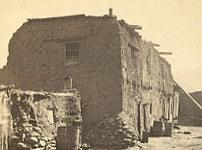
Founded by the Spanish in 1607, Santa Fe is the oldest European settlement west of the Mississippi. Soldiers, missionaries and colonists moved into the region and proceeded to subdue and convert the Indians of the area, numbering perhaps 100,000 at the time. Cattle, sheep, corn and wheat characterized the agrarian economy, Indians used as free labor, who received in return blankets, beads and other trade goods. Some 2,500 Spaniards lived in the area when in 1680 the Indians rebelled, killing 400 and driving the rest south. It was another 40 years before control was re-established.
At the end of the road to Mexico City--the El Camino Real, or Road of the King--Santa Fe was Spain's most distant outpost in the Americas, a sleepy, slow-moving community years removed from communication with the mother country. With independence from Spain, Mexico acceded to ultimate control in 1821, the year mountain men from Missouri carved out the thousand-mile-long Santa Fe Trail. The route opened up trade between United States territories and the Mexican hinterlands, and the town doubled as capitol of the Southwest and a much-needed supply point for the American trappers opening up the Rocky Mountains and points west.
After the outbreak of the Mexican War, Colonel Stephen Kearny seized the territory for the United States in 1846, becoming officially recognized as such in 1848. Over succeeding decades cattle and sheep empires flourished, along with range wars over land and water, the situation creating the reality and legend of William Bonney, otherwise known as Billy the Kid.
The railroad came to town in 1880, turning Santa Fe into a regional transportation center, allowing easier development of the mines in the region and opening up new markets for the cattle. Even so, Santa Fe and its environs existed out of the mainstreams of the American economy, thereby preserving much of its historic legacy. In successive years, tourism developed, highlighting the extant architecture and Indian cultures, a situation that maintains today.
~ ~ ~