TWHP
Sacramento, Downtown
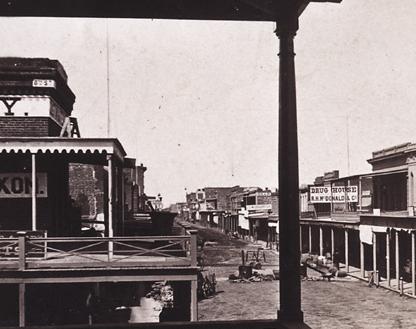
John Sutter, a Swiss-German adventurer, first moved to the valley in 1839, constructing Sutter's Fort in 1841, an early center of California commerce which did much to promote the initial development of California as the first wagon trains arrived from the East. The gold discovery of 1848 upset his plans of agrarian empire and orderly growth, and the early city of Sacramento took shape several miles distant along the river after military officers William Warner and William Sherman surveyed and laid out a town grid in late 1848.
As gold seekers flooded the area throughout 1849, the settlement flourished, newcomers erecting the odd wood building and thousands of tents, squatting freely on land claimed by Sutter and slaughtering his cattle for food. Sam Brannan, the Mormon colonizer who'd done so much to foster the early growth of San Francisco had already operated a store at Sutter's Fort in partnership with the General, and he set up shop in town, selling Sutter's real estate holdings as well. Served by the Sacramento River--named by a Spanish military expedition in 1808--and situated in the middle of a fertile valley, the town was perfectly adaptable to the new order.
Stores and banks proliferated, steamboats plied the river between Sacramento and San Francisco, and wagon roads threaded from the town into the gold-rich Sierra foothills a score or so miles to the east, creating a hothouse of commercial activity second only to the City. As the gold camps became established towns, Sacramento thrived as the choke point between the mountains and Bay, Sam Brannan soon erecting the first brick structures just up from the river. The establishment of Sacramento as the first permanent State Capitol in 1854 accelerated the growth, all a direct result of the central location.
The first train tracks in California--financed in part by William Sherman's bank--went down in 1855, running from Sacramento to Folsom; it was a significant herald of things to come. When Theodore Judah met discouragement in San Francisco as he promoted the idea of a transcontinental railway, he found a sympathetic audience among some Sacramento shop keepers who resented being exploited by the City's shipping interests. Leland Stanford, Collis Huntington, Mark Hopkins and Charles Crocker entered into a partnership with Judah as the Central Pacific Railroad in 1861, finagled Federal subsidies, and started laying track. Completed in 1869, the Transcontinental Railroad genuinely linked the nation for the first time and turned Sacramento into the major transportation hub of the state.
Meanwhile, the great Nevada silver discoveries just over the Sierras came to light in 1859, funnelling vast amounts of riches and materiel through Sacramento over the next 20 years. The valley by then had filled with farms and ranches, becoming a great agricultural producer; Sacramento controlled the trade and prospered as California began to send its fruits and vegetables East in the first refrigerated railcars during the 1870s. By 1910, a third of all jobs in Sacramento derived from the Southern Pacific Railroad--the direct descendent of the Central Pacific--and the railroad would remain king well into the middle of the 1900s, when state government would supplant it.
~ ~ ~