TWHP
Placerville, Freight Wagon on Main
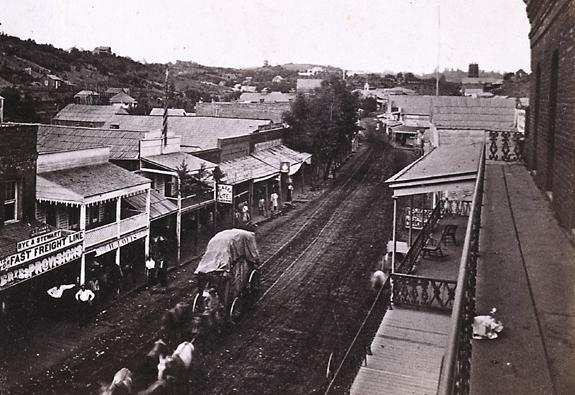
Placerville came to life in 1848 within months of James Marshall's discovery of gold at Coloma in January of that year. Originally called Dry Diggings, the mining camp earned the name Hangtown for its ready intolerance of robbers and murderers, stringing up many over the first years of the town's existence. As things settled down, the residents decided on the name "Placerville" in 1854, indicating it as the little town of gold; by then it was among the larger towns of the state.
As the gold played out up and down the foothills, many towns like Placerville disappeared. But Placerville held a place on the route between the Sierra passes and Sacramento, becaming a stop on the Pony Express; when silver was discovered in Nevada in 1859, the town benefitted from the new traffic.
For a decade and more, a steady stream of freight wagons passed east and west between Nevada mineral finds and the California centers that exploited them, much of the activity centered in Placerville. By the time mining waned in the 1870s and '80s, the surrounding areas had developed more normal economies based on timber and agriculture. Already the county seat and a well-established commercial hub, Placerville managed to survive and genuinely prosper, unlike so many of its early contemporaries.
~ ~ ~