TWHP
Benicia, The Arsenal
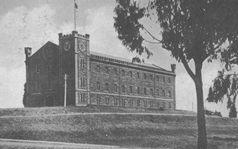
The first town in California founded by Americans, Benicia dates from 1847. General Mariano Vallejo, the Mexican administrator who owned and controlled tens of thousands of acres, sold interests in the property to Robert Semple and Thomas Larkin for $100 each, and the three laid out a city and marketed lots. No locale in the Bay Area offered better prospects for success. Sited at the midpoint of the north side of the seven-mile-long Carquinez Straits, Benicia benefitted from a superb location for exploiting the agricultural resources of a huge area. The Sacramento and San Juaquin rivers empty into the straits just a few miles east on their ways to San Francisco Bay, linking the town to fertile regions hundreds of miles distant in either direction, and the Napa River emerges a few miles west, from where the prevailing winds blow. Across the straits a half-mile away, Contra Costa hosted cattle by the thousands. But most important of all, Benicia had a protected deep-water anchorage close to shore, a situation unique in the Bay Area, making it ideal as a major port. Given the rosy prospects, the trio charged top dollar for their lots.
Yerba Buena at the time was a miserable little settlement on a cove within six or seven miles of the entrance to San Francisco Bay, cursed by mudlafts that extended far from shore, a condition cursing most of the bay's frontage; nothing could match the town on the straits as a port. Fully cognizant of the fact, the land brokers hoped to exploit the fact with a convenient marketing ploy. Having committed to naming the town after Vallejo's wife--Francisca Benicia--they naturally chose Francisca, hoping all comers would assume that it was the major port on San Francisco Bay, as it rightfully should have been. After becoming aware of the plan, Yerba Buena's first American administrator, Washington Bartlett, arbitrarily changed the name of Yerba Buena to San Francisco. Thus the name "Benicia," rather than "Francisca."
That minor wrinkle should have done nothing to threaten the success of Benicia, but the Gold Rush intruded; proper anchorages became irrelevant to people willing to abandon ships in the mud in order to get to the gold country, and that's what happened as people flooded to San Francisco from around the world. Even so, Benicia flourished after a fashion; the Pacific Mail and Steamship Company established their facilities in the town, along with the first industrial facility on the West Coast. The Army constructed the first stone fort west of the Mississippi in the town, and the first example of Greek Revival architecture on the coast came to dominate the town center, the building becoming the State Capitol for a brief period in 1853.
Despite the unfulfilled commercial promise, Benicia became home to numerous colleges, attended by children of the early state's finest families. San Francisco's Hastings College of Law--California's first--has its roots in Benicia, as do San Rafael's Dominican College and Oakland's Mills College.
The town soon earned the name "Athens of the West," but generally suffered stagnation, the fort and arsenal the primary long-term industry, eventually joined by tanneries and the Matthew Turner Shipyard, one of the busiest on the coast by century's end.
In 1879, the Central Pacific Railroad chose Benicia as the ideal spot for a ferry landing, so trains could be transported across the straits to Port Costa. The largest ferries in the world operated on the mile-long route, entire trains loaded onto the boats. That ended in 1927, with the building of the first Carquinez Bridge.
~ ~ ~