TWHP
Mariano Vallejo, 1808-1890
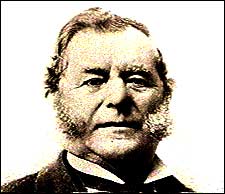
Mariano Vallejo was the George Washington of California, a stolid, dignified man of great vision. Unlike the first president, however, within his lifetime Vallejo got to see his progeny grow to maturity and fascinate the world with its unprecedented wonders. Born to a family of influence at the provincial capital of Monterey, Vallejo early distinguished himself with a love of learning, an open mind and great initiative. Attending classes run by soldiers, he enhanced his education with books brought by Pacific trading ships; he entered military service in 1824 and rose quickly in the ranks. After a posting to Yerba Buena/San Francisco in 1830, he was named commander of the installation the next year. He pacified the indians through a combination of coercion and diplomacy, and in 1834 was ordered to take over the mission at Sonoma and
secularize it; a year later he laid out a town and moved his headquarters there from Yerba Buena in order to discourage the nearby Russians at Fort Ross from extending their reach. Vallejo adroitly navigated through the complexities of a confusing situation; the Mexican central government largely ignored the distant province, regional administrators squabbled with each other, John Sutter undercut his authority with his own manipulations, the local priests resented his liberal views--he was excommunicated for refusing to relinquish banned books--and the United States, England, France and Russia all coveted the Pacific coast. By this time Vallejo had come to admire the American form of government, just as he saw the limitations of the Mexican regime. But as the Mexican War broke out in 1846, the early American pioneers in the region decided to take over the state on their nation's behalf, and they seized and jailed Vallejo, incarcerating him at Sutter's fort. Despite the initial disillusionment, order was restored with the introduction of an American administration, and Vallejo became a respected member of the first constitutional convention, proving an early proponent of women's rights. With his vast land holdings and herds of cattle, horses and sheep numbering in the thousands, Vallejo was well-set to take advantage of the new situation, but the Gold Rush swept all before it. As with so many other early residents, their plans and wealth were badly compromised. His land was mired in litigation, and not all of his business ventures proved profitable. But he'd had the foresight to buy a little estate of 200 acres in Sonoma soon after the American takeover, and Lachryma Montis--Mountain of Tears--remained his home throughout his life. Vallejo suffers badly in the histories, in the best light cast as a tragic victim and dupe of the American ascendancy, in the worst, a man who exterminated the indians for Mexico, and then sold out his fellow Mexicans to
the United States. But his misfortunes were those suffered by many, most of them Americans; in a time of turmoil and change some of his ventures succeeded, some did not. Though he died with a modest estate, great amounts of money passed through his hands along the way; his own speculations diminished it. The land he "owned" and gave away was intended by the Mexican government to be parsed out to worthy settlers who would develop it, and the litigation over title cursed old Mexicans and new Americans with equal misery. At the time of his death--four decades after statehood--Vallejo was considered a living legend, and to the very end he was treated with respect and admiration by the most influential Californians. It is difficult to imagine anyone handling the earth-shaking events of that era any better than Vallejo, a gracious man distinguished by the highest motives and finest spirit of enlightenment.
~ ~ ~