TWHP
Collis Huntington, 1821-1900
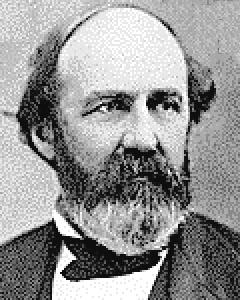
Collis Huntington was the brains behind the Central Pacific Railroad, which eventually became the Southern Pacific. After establishing himself as a canny businessman and shopkeeper in New York, he followed the hordes to California soon after the gold discoveries. Opening a hardware store in Sacramento with Mark Hopkins in 1854, the pair prospered; after attending a gathering where Theodore Judah introduced the idea of a cross-country train route, Huntington arranged a private meeting with the visionary engineer, and the Central Pacific was born. Huntington's lobbying efforts in Washington, DC, resulted in a flow of federal subsidies, and he ably worked the financial networks back East to supplement the government largesse. Unlike his partners, who became distracted by other endeavors after the Transcontinental Railroad was completed in 1869, Huntington continued to develop a railroad empire of national scope which transformed the nation. He often lammented the lack of help provided by his partners, but he didn't let that stop him. In 1871 he took over the Chesapeake and Ohio Railroad, linking the Atlantic Seaboard with the Ohio River, which resulted in the evolution of his coastal coalyards into the city of Newport News, Virginia; he eventually made it into one of the world's's most prolific shipbuilding cities. Through acquistions he connected the state of California with almost 9,000 miles of track, and he then constructed another transcontinental route from Portland, Oregon, to New Orleans. He was said to be the only railroad magnate in America who could ride his private railroad car coast-to-coast on his own rails. By the time he died, he'd been president of the Southern Pacific for 10 years, and he left the organization so powerful that it became vilified as the "Octopus" for its ability to so strangle commerce through its many monopolies.
~ ~ ~